
EHDS Data Hubs
The EHDS introduces the role of health data intermediation entities or Data Hubs. Dr. Vlieger explains when and why this role is useful — for efficiency, scientific relevance, and trust.
The least known EHDS role: the Data Hub
The EHDS creates a number of new roles regarding the reuse of health data. The Health Data Access Body—a new public authority where one applies for authorization to work with data in a secure processing environment—is well known. Far less attention is paid to the role of the trusted data holder, and the health data intermediation entities are completely unknown. Yet, to me, they simply appear to be what is commonly referred to as a Data Hubs. Such Data Hubs are crucial for unlocking data in a way that is more efficient, benefits science, and, above all, can help foster greater trust in the system. So let us consider what Article 50 and Recitals 59 and 72 appear to make possible.
Efficiency - as with the Dutch GGD
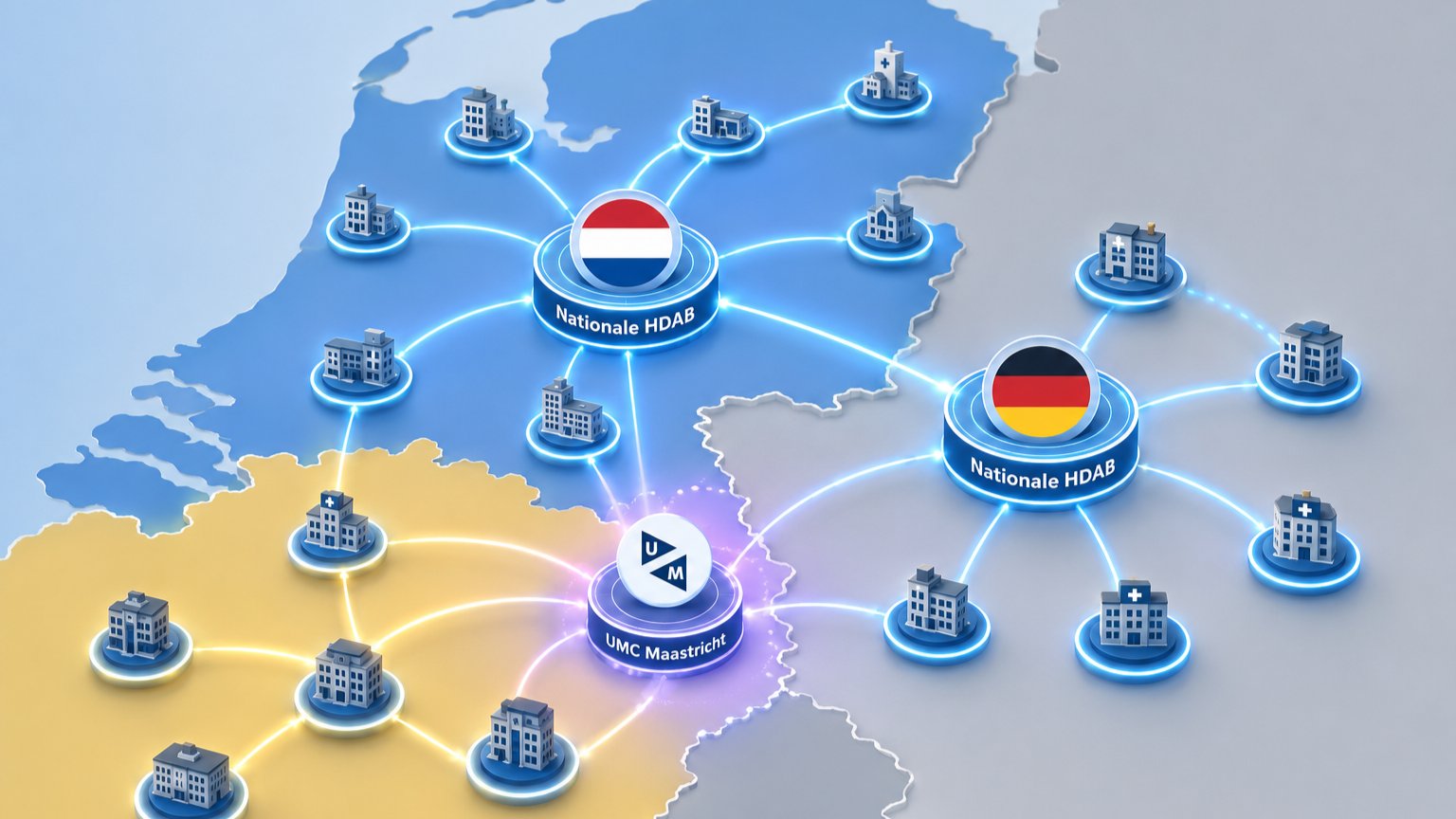
The EHDS requires health data holders to make their data available for beneficial reuse, such as scientific research. To improve the system's efficiency, the Netherlands could designate specific organizations as intermediary entities. However, it is important to note that this role differs from the "data intermediation service" defined in the Data Governance Act. Given the potential for confusion, it would be prudent to use a different term for them. "Data Hub" seems the most suitable choice; this non-legal term refers to organizations tasked with performing the functions required of data intermediary entities. They aggregate data from "certain categories" of data holders. Consequently, the obligation to supply data to the Health Data Access Body (HDAB) shifts from the individual data holders to the Data Hub. For instance, the Netherlands has many Municipal Public Health Services (GGDs), all of which possess data valuable for medical-scientific research. It would be illogical for the HDAB to have to approach every single GGD individually for every research project requiring their data. The Dutch government could, therefore, designate an umbrella organization like GGD GHOR as a Data Hub to assume the EHDS obligations of all the individual GGDs. Of course, the similarity between data holders could also be based on their location within a specific region; Member States are free to decide this for themselves.
Scientific interest - such as with general practitioners
A second role for a Data Hub concerns "micro-data holders." The EHDS stipulates that small data holders are not required to supply data to the HDAB, as doing so would impose an excessive administrative burden on small organizations. Yet, some data of immense scientific importance are held precisely by such small data holders. In the Netherlands, for instance, this applies to general practitioners (GPs). Research into the early detection of lung cancer, for example, requires linking hospital patient records with GP records containing information on previously reported health complaints. This is vital research, but the relevant data would fall outside the scope of the EHDS due to the small scale of the average GP practice. Consequently, national legislation could mandate that such micro-data holders supply data to a Data Hub—such as Nivel or IPCI—thereby making this data available for important research in a secure and efficient manner. The same applies to data from dentists, physiotherapists, or dietitians, for example.
For trust – such as with diabetes
A third benefit of Data Dubs is that they increase trust in the system. For instance, diabetes patients might worry about their privacy if commercial enterprises had direct access to their data; because of this (entirely understandable) concern, they might withhold their data. However, suppose Dutch legislation were to stipulate that real-time readings be made available to the Diabetes Association—with the association managing the data (assisted by, say, the National Health Care Institute)—then far fewer patients would likely object. The Diabetes Association could then anonymize the data or answer statistical queries. If trust in the system is boosted through the involvement of such organizations, it will lead to broader data availability for scientific research and the development of new, beneficial healthcare products. To reiterate: the EHDS stipulates that Data Hubs collect data from similar types of data holders. Consequently, the possibilities regarding Data Hubs are endless.
In secondary legislation
In short, there are many good reasons to leverage the role of Data Dubs on a large scale: the system becomes more efficient, more data becomes available (securely) for medical-scientific research, and—importantly—this can foster greater patient trust in the system. The implementing legislation for the EHDS could stipulate that all Data Hubs be supported by the National Health Care Institute (Zorginstituut), given that the Institute has already been designated to oversee quality registries. Naturally, the specific Data Hubs should not be designated in the legislation itself; if one were to prove ineffective, removing it would require parliamentary approval, which takes too long. Therefore, the Minister of Health, Welfare and Sport should have the authority to designate Data Hubs (subject to parliamentary oversight). It would be valuable for us in the Netherlands to hold in-depth discussions at conferences on how to optimally structure the EHDS system by utilizing the role of Data Hubs. One final note: it is not permitted to act as both a Data Hub and a Trusted Data Holder simultaneously. Consequently, Data Hubs may not submit draft decisions to the HDAB or make data available via their own SPE.